
Last updated November 15, 2026
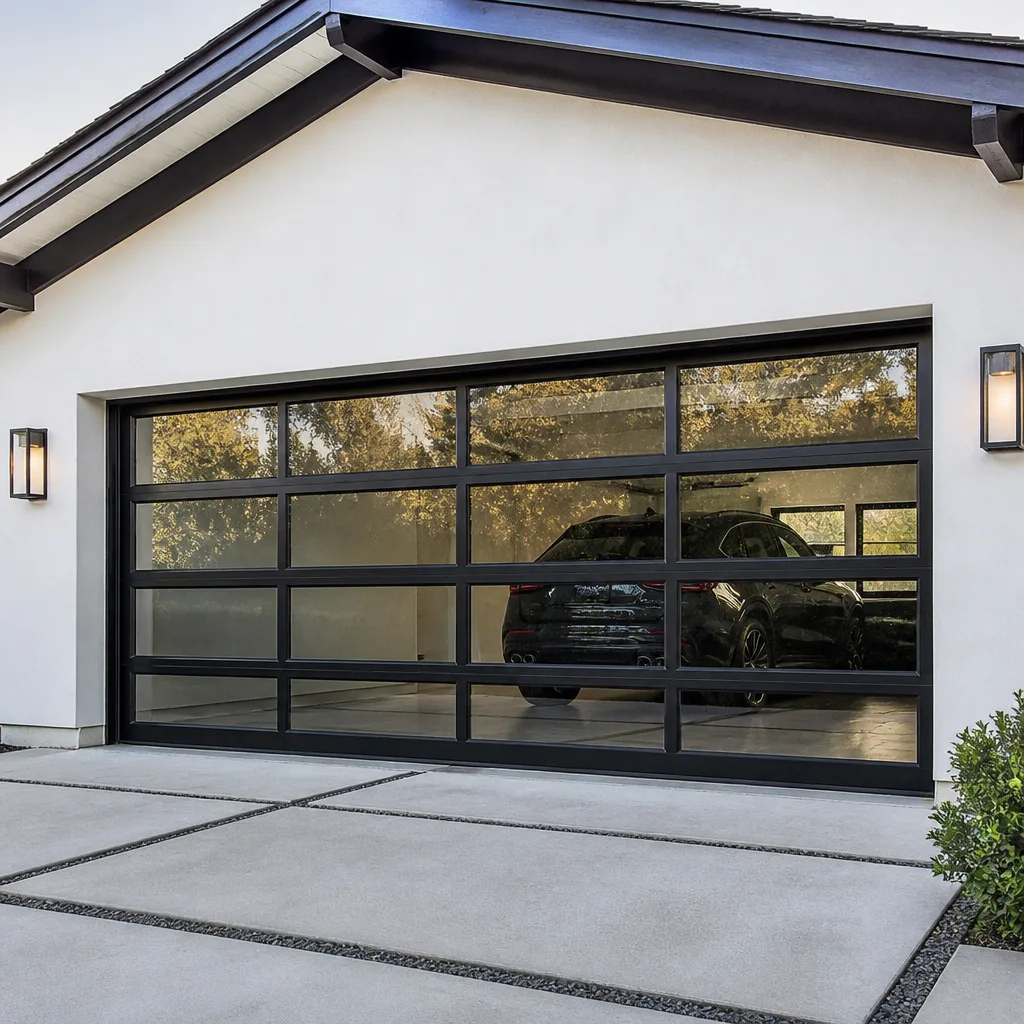 Full-view glass
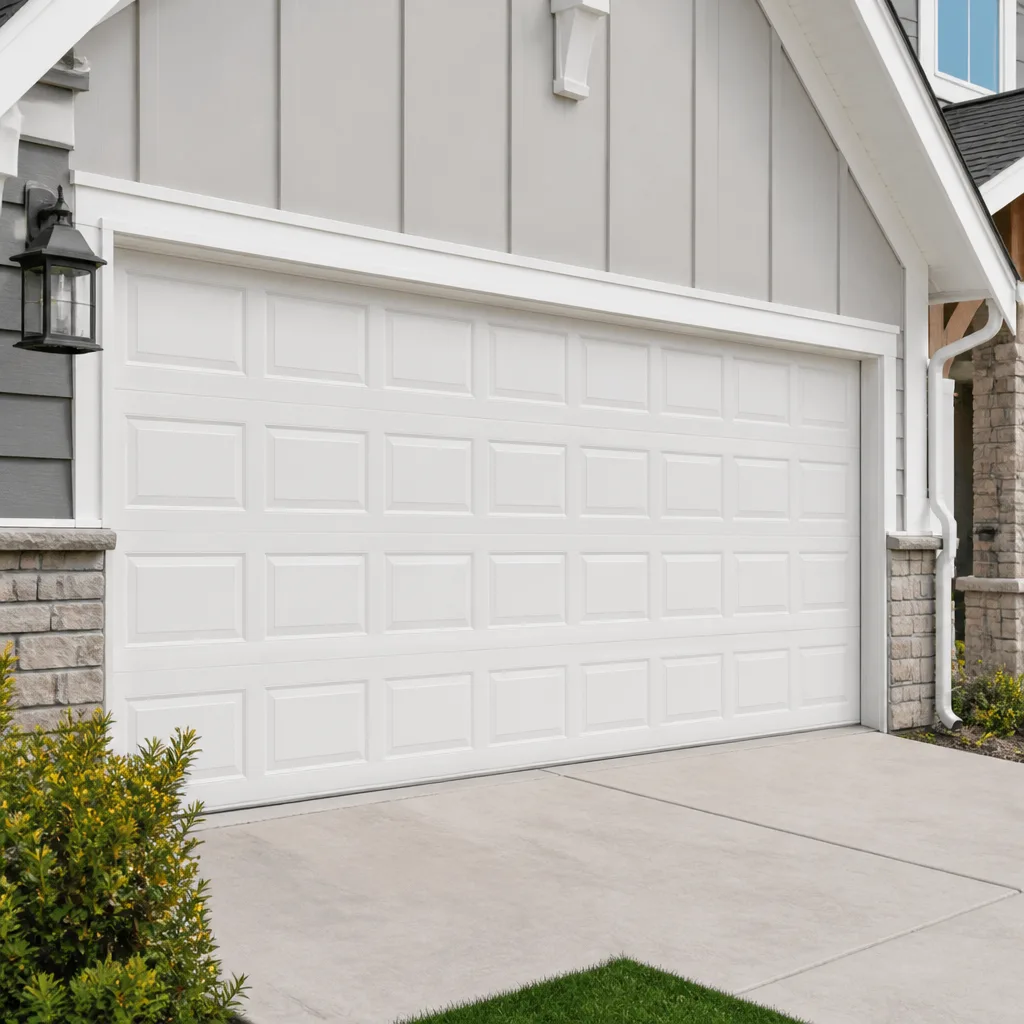 Raised-panel steel
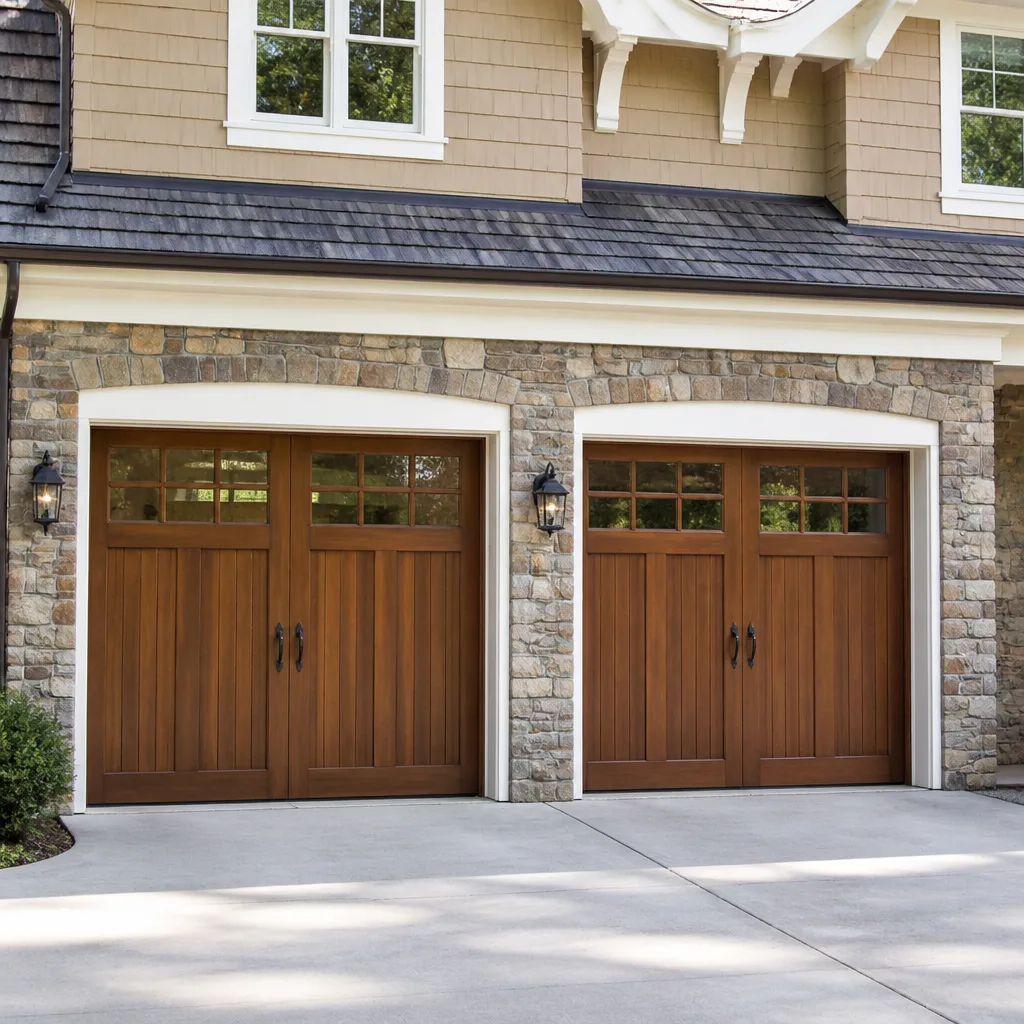 Carriage house
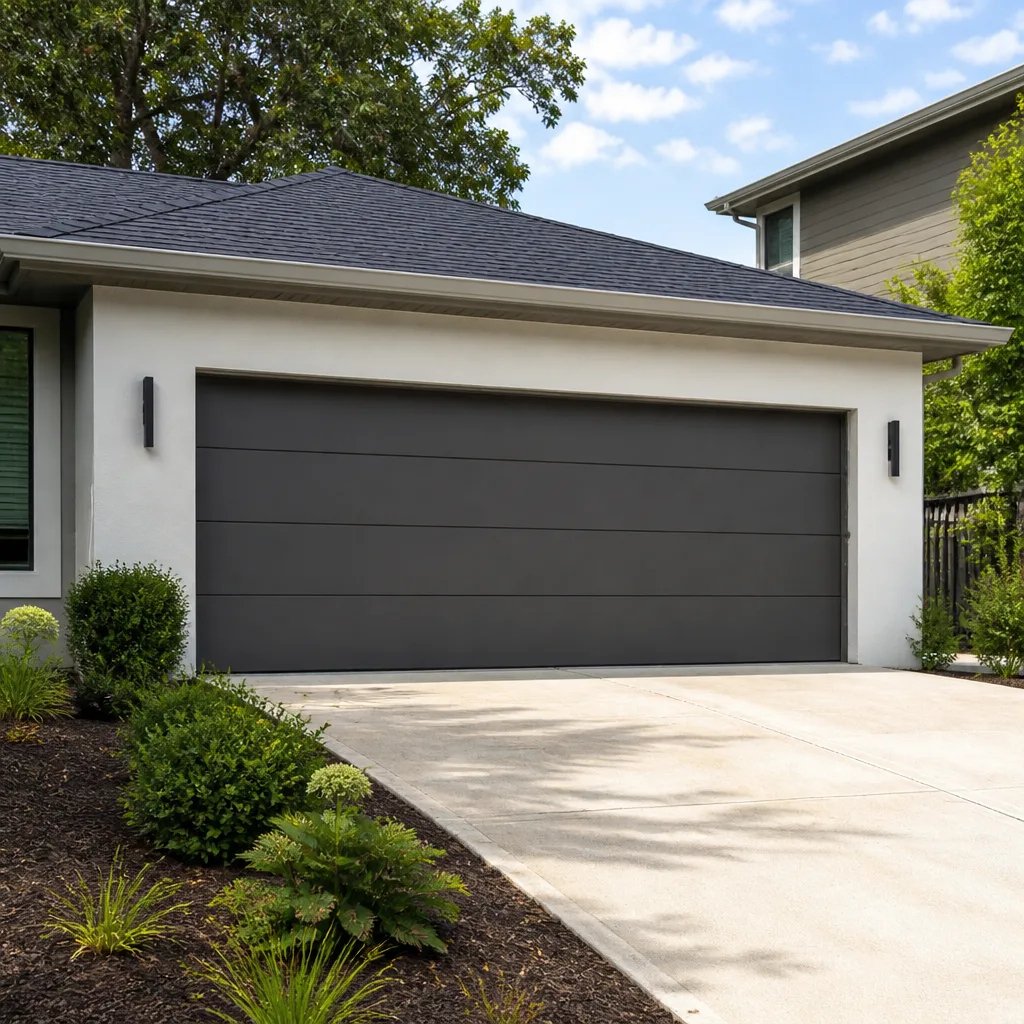 Modern flush
 LiftMaster openers
 Chamberlain openers
Full 25-point door and opener safety check with every visit - springs, cables, rollers, tracks, and your LiftMaster or Chamberlain opener included
You get a price before we start. It does not change when the pro arrives.
Get your free estimateDIY vs Professional Garage Door: The Riverview Homeowner’s Decision Guide
Most garage door advice splits into two useless camps: “never touch it” or “anyone can fix it with a YouTube video.” Neither is honest. The truth is that a Riverview garage door has a handful of jobs that carry real mechanical risk and a longer list of jobs a careful homeowner handles in an afternoon. Torsion springs and bottom brackets can hurt you badly when released incorrectly; that’s physics, not a legal disclaimer. Cleaning sensors or swapping weatherstripping won’t. This guide separates the two lists task by task, covers what Florida law expects when work needs a permit, and shows what a failed DIY attempt actually costs once a technician has to untangle it.
Quick Answer
Homeowners can safely handle maintenance tasks that don’t involve stored tension: testing and cleaning safety sensors, replacing weatherstripping, lubricating hinges and rollers, and programming remotes. Any work on torsion springs, extension springs, cables, or bottom brackets belongs with a trained technician. For permitted structural work in Riverview, use a licensed contractor. Everything else comes down to your comfort level and whether the door is balanced and safe afterward.
Styles & brands we work with
- Raised-panel steel
- Carriage house
- Modern flush
- Full-view glass
- LiftMaster openers
- Chamberlain openers
Table of Contents
- Where the Real Line Is: Tension, Not Skill
- Tasks That Are Genuinely Safe for Homeowners
- Tasks That Carry Real Mechanical Risk
- Florida Rules, Permits, and the Licensed Contractor Question
- What a Botched DIY Repair Actually Costs
- The Tools You Actually Need (and the Ones You Don’t)
- How to Judge a Garage Door Tutorial Before You Follow It
- How to Evaluate a Professional Before You Hire
Where the Real Line Is: Tension, Not Skill
The DIY-vs-professional question isn’t really about how handy you are. It’s about stored energy. A torsion spring holds the full weight of your door under tension, and when it fails mid-adjustment, the release is sudden and violent. A cable under load snaps the same way. These aren’t jobs that reward confidence; they reward the right tools and the experience to know when a spring is about to let go.
Everything else on a garage door system is mostly mechanical maintenance. Panels sit on hinges. Weatherstripping slides into a channel. Photo-eye sensors beam an infrared signal across the opening and stop the door when something breaks the beam. None of that stores enough energy to injure you.
Here’s the practical filter we suggest to homeowners in Riverview: ask whether the task requires you to release or adjust a spring, cable, or bracket that holds the door’s weight. If yes, stop and call. If no, you can usually proceed.
One more layer: some work that isn’t physically dangerous still requires a permit, and permits require a licensed contractor. That’s a separate question from safety, and we cover it in its own section below.
The reason we split it this way rather than saying “always call a pro” is simple. Homeowners who understand which jobs are low-risk save money on things that don’t need a service call. Homeowners who understand which jobs carry real risk stop trying to fix a broken spring with a pair of vice grips.
Tasks That Are Genuinely Safe for Homeowners
What garage door maintenance can a homeowner do safely? Anything that doesn’t involve spring or cable tension qualifies. These are the jobs we’d honestly tell a neighbor in Riverview to handle themselves before booking a technician.
Sensor and Safe-T-Beam Testing
The photo-eye sensors near the floor of your door are the reason the door reverses when a child or pet walks through. Testing them takes about two minutes:
- Close the door and confirm both sensor lights are lit and steady (not blinking).
- Wave an object through the beam and watch for the door to reverse.
- Wipe the sensor lenses with a dry cloth if they’ve collected dust or spiderwebs.
- Realign the brackets if one sensor’s indicator is dim or off.
In our experience, a surprising number of “my door won’t close” calls turn out to be dirty sensor lenses or debris blocking the beam. That’s a task worth learning.
Replacing Bottom Weatherstripping
The rubber seal along the bottom of the door keeps rain and insects out. In Riverview’s wet season, it takes a beating. Replacement is a matter of pulling the old strip out of its channel and sliding in a new one cut to length. Most doors use a common T-style or U-style seal.
Lubricating Hinges, Rollers, and Tracks
A small amount of garage door lubricant on hinges, rollers, and the pivot points of the opener arm quiets a noisy door and reduces wear. Don’t grease the tracks themselves; debris collects in grease and jams the rollers.
Reprogramming Remotes and Keypads
Whether your opener is a LiftMaster, Chamberlain, or Craftsman unit, the programming process is usually a matter of pressing a “learn” button on the motor head and following the manufacturer’s steps. Smartphone app pairing follows the same logic.
Cosmetic Work
Painting a steel door, touching up scratches, or washing the panels are all safe. So is swapping out decorative hardware.
Tasks That Carry Real Mechanical Risk
Which garage door repairs should a homeowner never attempt? Any task that requires releasing, adjusting, or replacing a component under spring or cable tension. This is the short list where the risk is real and the injury potential is significant.
Torsion Spring Replacement
A torsion spring above the door holds thousands of pounds of force at rest. Even a “winding” adjustment on an existing spring is dangerous, because the bar can slip and whip. Only a trained technician with the correct winding bars and an understanding of the door’s weight should touch this. This is the single biggest reason we tell homeowners to call.
Extension Spring Replacement
Older doors and many lighter units use extension springs on either side of the door, running along the horizontal tracks. These stretch under load and can fail with a snap. Replacing them without the correct safety cables and proper tensioning is a genuine hazard.
Bottom Bracket and Cable Work
The bottom bracket anchors the lift cable and the spring line. When a cable comes off its drum or a bracket loosens, the door is under tension and can release suddenly. If you see a frayed or loose cable, don’t run the door and don’t try to reattach it yourself.
Track Realignment
Bent or misaligned tracks can sometimes be tapped back into place, but a track that’s off enough to jam the door usually means the door’s frame or weight distribution has shifted. Attempting to force it back can crack a panel or damage the rollers.
Opener Motor or Gear Replacement
Swapping a whole opener head is manageable for a confident homeowner if the existing bracket and wiring are sound. Replacing the drive gear inside an opener, though, means opening the housing on a powered unit. It’s not the same category of danger as a spring, but a mistake there can short the board and cost more than a new opener.
The good news: if a spring or cable fails, a specialist can diagnose and fix it the same day. For garage door repair in Riverview, we can quote it before we start.
Florida Rules, Permits, and the Licensed Contractor Question
Does Florida require a licensed contractor for garage door work? It depends on the task. Routine maintenance and repairs generally don’t require a permit. But structural changes, replacement of the door itself in some jurisdictions, and any work that alters the home’s wind-load envelope do require a licensed contractor and a permit.
We won’t invent a rule for you. What we will say is that garage door requirements vary between local jurisdictions, and they change. If your work involves any of the following, confirm the local rule before you start:
- Replacing the entire door with a different model or weight class
- Adding a new opening, or changing the size of the existing one
- Structural changes to the framing around the door
- Replacing the opener with one of a different horsepower or type
- Any change that could affect how the door performs in high wind
The right first move for a homeowner in Riverview is a call to your local building department. Ask specifically which of your tasks requires a permit and whether a licensed contractor is required to pull it. A quick phone call to the permit office settles it; a bad assumption afterward can be expensive. We’re happy to answer questions about what we’ve typically seen for permitted jobs, but the building department’s answer is what counts.
The clean way to think about it: mechanical safety and code compliance are two separate filters. A job can be physically doable by a homeowner and still be one a permit office expects a licensed contractor to handle.
What a Botched DIY Repair Actually Costs
What does a failed DIY garage door repair really cost? More than the parts. The biggest hidden expense is the diagnostic time a technician spends figuring out what the previous attempt changed before fixing the original problem. Labor rates in Riverview run in the same range as the rest of the Tampa area, and a technician’s time is time.
What a homeowner usually ends up paying for on a repair that’s already been attempted:
- Diagnosis time: technician hours spent tracing incorrect wiring, misaligned hardware, or reversed springs
- Replacement parts: original part plus the one that failed during the attempt
- Reversed labor: undoing an adjustment before making the correct one
- Sometimes a full component: a spring that got wound wrong often can’t be reused safely
That last one is the real cost driver. A spring decided to be fine during a DIY attempt and then fails on its own shortly after often can’t be trusted again. The homeowner pays for a new spring twice, once for the attempt and once for the replacement.
Opener mistakes have a similar pattern. Reversing the polarity on a wire, disconnecting a wall control improperly, or mispairing a LiftMaster or Chamberlain remote with the wrong model year often ends with a diagnostic visit, and occasionally with a replacement board that costs more than a service call.
We don’t mention any of this to discourage DIY. We mention it because the honest math favors a professional for the risky jobs, and favors the homeowner for the routine ones. For the jobs in between, the cost of a written estimate is zero. We’ll always quote before starting work, so you know the number before the wrench turns.
The Tools You Actually Need (and the Ones You Don’t)
What tools do you need for safe garage door maintenance? A much shorter list than the internet suggests. Forget the $400 specialty tool sets; here’s what’s genuinely useful in a Riverview garage.
- A 1/2-inch drive socket set with the correct sizes for the bolts on your door’s hinges and brackets.
- A cordless drill or impact driver for weatherstripping and hardware swaps.
- A small adjustable wrench for tightening the sensor brackets.
- Garage door lubricant (not WD-40) for hinges and rollers.
- A level for checking that the door edge is plumb after a track nudge.
- Work gloves and safety glasses for anything near the door tracks.
- A step ladder tall enough to reach the opener head without stretching.
What you should not buy: winding bars for torsion springs, cable pullers, or a spring tensioning kit. Those are professional tools, and having them doesn’t mean you have the training to use them safely. The reason those kits exist is that a professional shop needs them. A homeowner doesn’t.
If a job needs a tool you don’t recognize, that’s a good signal it belongs with a technician. When our technicians arrive, they arrive with those tools, plus the diagnostic instruments to test a LiftMaster or Genie opener against its actual fault.
How to Judge a Garage Door Tutorial Before You Follow It
Are garage door YouTube tutorials safe to follow? Some are, but many aren’t, and the warning signs are easy to miss if you don’t know what you’re looking at. We’ve seen homeowners in Riverview struggle through videos that were clearly recorded in a cold-climate garage with a completely different door configuration.
Watch for these red flags before you grab a tool:
- The door doesn’t match yours. A torsion spring door and an extension spring door have completely different procedures; a video of one won’t translate to the other.
- The presenter is working on a door in a snowy climate. Older videos often show northern configurations that don’t match the steel doors used in most Florida homes.
- The presenter uses hardware you don’t recognize. If the model numbers and bracket shapes in the video don’t look like yours, don’t assume it’s the same.
- The presenter is winding a spring or manipulating a cable. Skip. Not because the risk is unusual, but because a spring that fails during the present is exactly as dangerous as a spring that fails during your attempt.
- The comments are full of “this didn’t work on my model.” A good tutorial will say which door and opener models it applies to.
- The video is older than your house. If your home was built recently, the tutorial may be showing an opener generation you don’t have.
The one rule that holds regardless of the video: never take your cues on spring or cable work from a tutorial. Those jobs deserve a live, in-person assessment from someone who can see the exact door and weigh the exact panel.
If a video mostly covers the safe homeowner tasks, and it maps to your actual door, follow it. Otherwise, watch it as general education, not as a plan.
How to Evaluate a Professional Before You Hire
What should a homeowner look for in a garage door professional? Here’s what’s genuinely useful to check, whether you’re in Riverview or anywhere in the Tampa area.
Licensure and Insurance
Ask for proof of state licensing and insurance before any significant work begins. This is standard, and a legitimate operator won’t mind being asked. If a company can’t produce it, that’s a real warning. Our company operates in Riverview and has a straightforward answer for every customer who asks.
Brand Fluency
Garage door and opener brands vary enough that knowing one brand well isn’t the same as knowing several. Craftsman, Raynor, LiftMaster, and Chamberlain each handle electronics, springs, and hardware differently. Ask a prospective technician which brands they work on routinely; a focused specialist will have a clear answer and a working knowledge of each one’s typical failure points.
Written Estimate Before Work
Any company you hire should quote the price in writing before starting. That’s not just a courtesy; it’s the only way to know what you’re agreeing to. If the number isn’t put in writing up front, ask for it in writing.
Repair-First Philosophy
Good specialists look at whether a component can be repaired before recommending a full replacement. A door that needs a new spring usually doesn’t need a new door. If a company leads with replacement before explaining a repair, ask why.
Response Time
For urgent issues, ask about their same-day availability. A door that won’t close on a Friday afternoon is a security issue; a company that can respond the same day is more useful than one that can’t. We answer 24/7 on the phone line.
Common Mistakes to Avoid
- Winding a spring because the video made it look easy. The video compresses the process; the stored energy doesn’t. A spring under tension is not the same in real life as it is on a screen.
- Oiling the tracks. Lubricant on the tracks attracts grit, and grit in the rollers jams the door. Save the lubricant for hinges, rollers, and the pivot points instead.
- Ignoring a blinking sensor light. A dim or blinking safe-t-beam usually means out-of-alignment or dusty lenses. Wiping the lens and nudging the bracket often fixes it; ignoring it keeps the door unreliable.
- Reusing a spring that was already wound wrong. A spring that has been tampered with may look fine and fail without warning. If it’s been adjusted incorrectly, replacing it is the safe move.
- Following an out-of-climate tutorial. A northern-climate video may show a door type and hardware that isn’t standard in most Riverview homes. Match the video to your actual door before assuming anything.
- Buying a specialty tool list you don’t need. A homeowner’s job doesn’t require winding bars or a cable puller. Those exist for the professional side of the trade.
- Skipping the permit question for structural work. If a job touches framing, wind-load performance, or a full door replacement, ask Riverview’s building department before starting. The answer is one call away and prevents an expensive undo.
See the difference
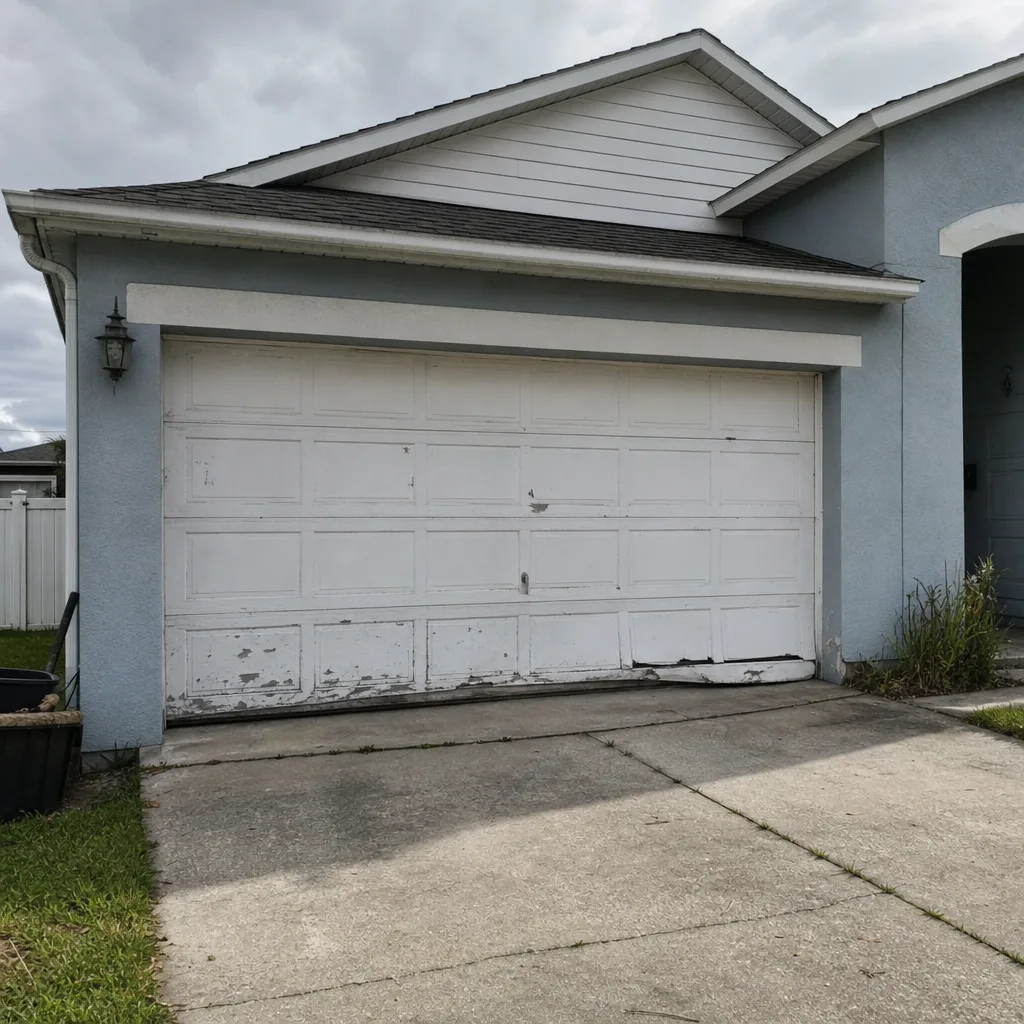 Before
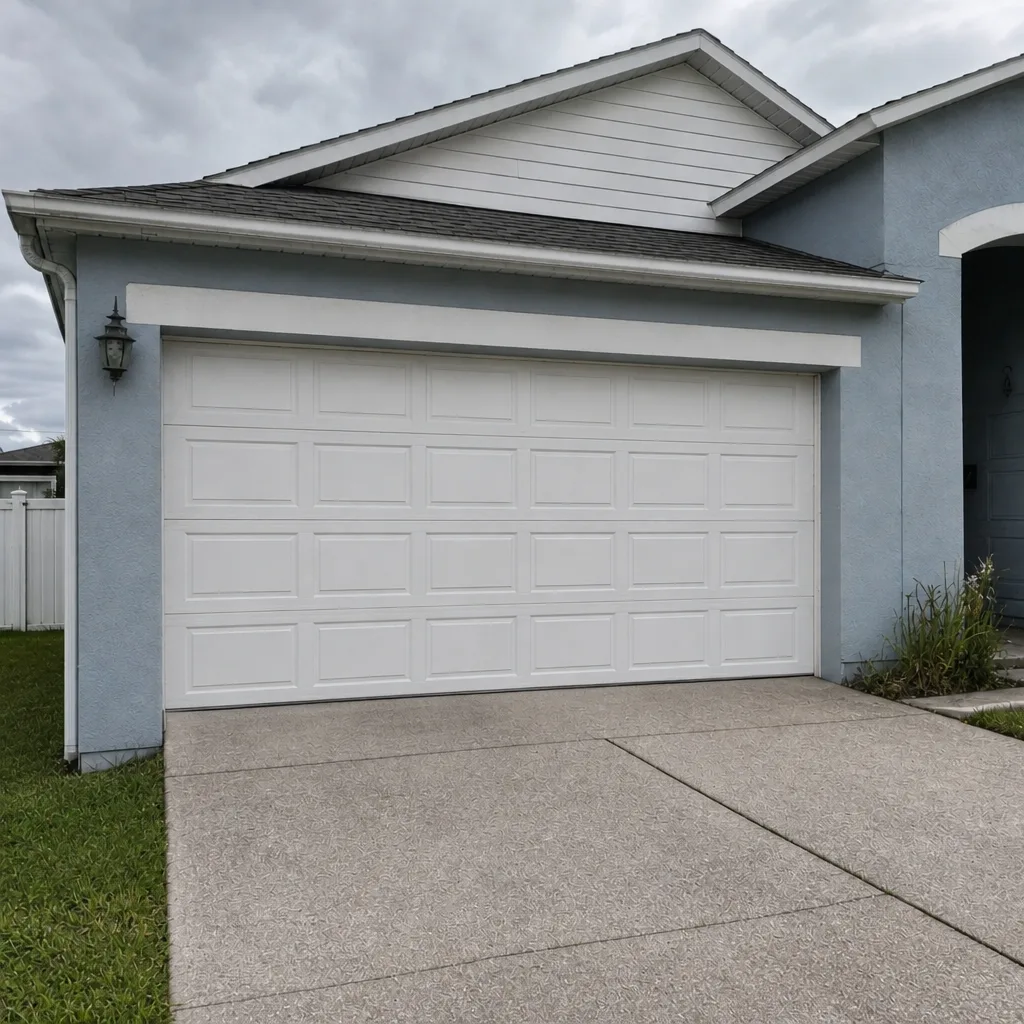 After
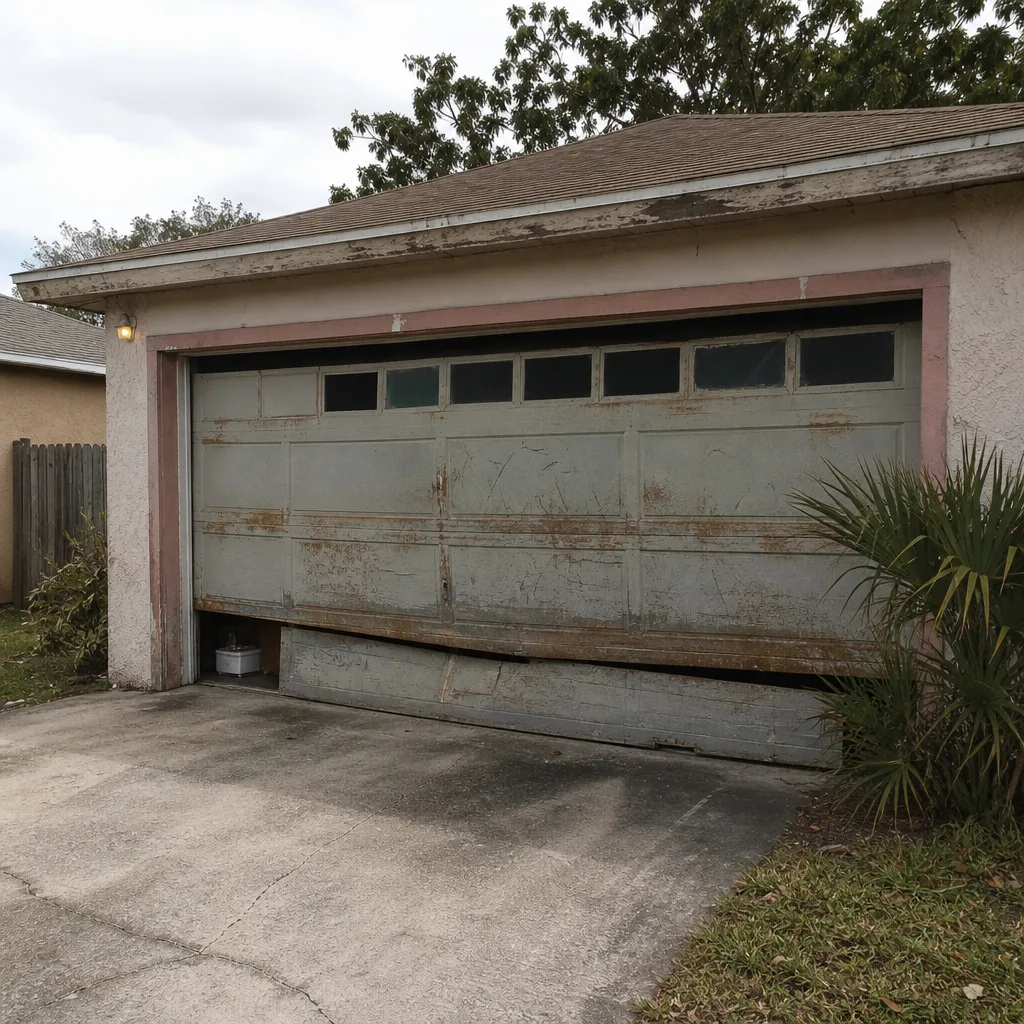 Before
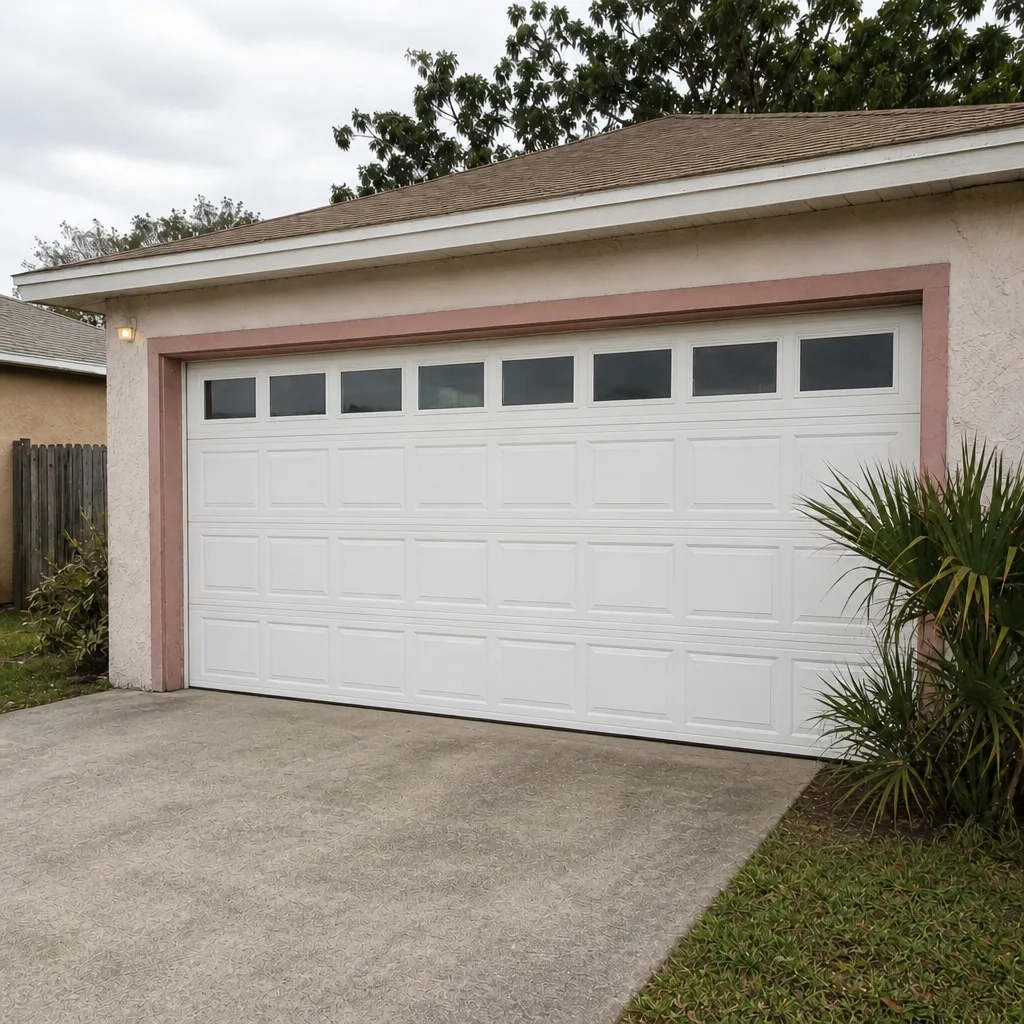 After
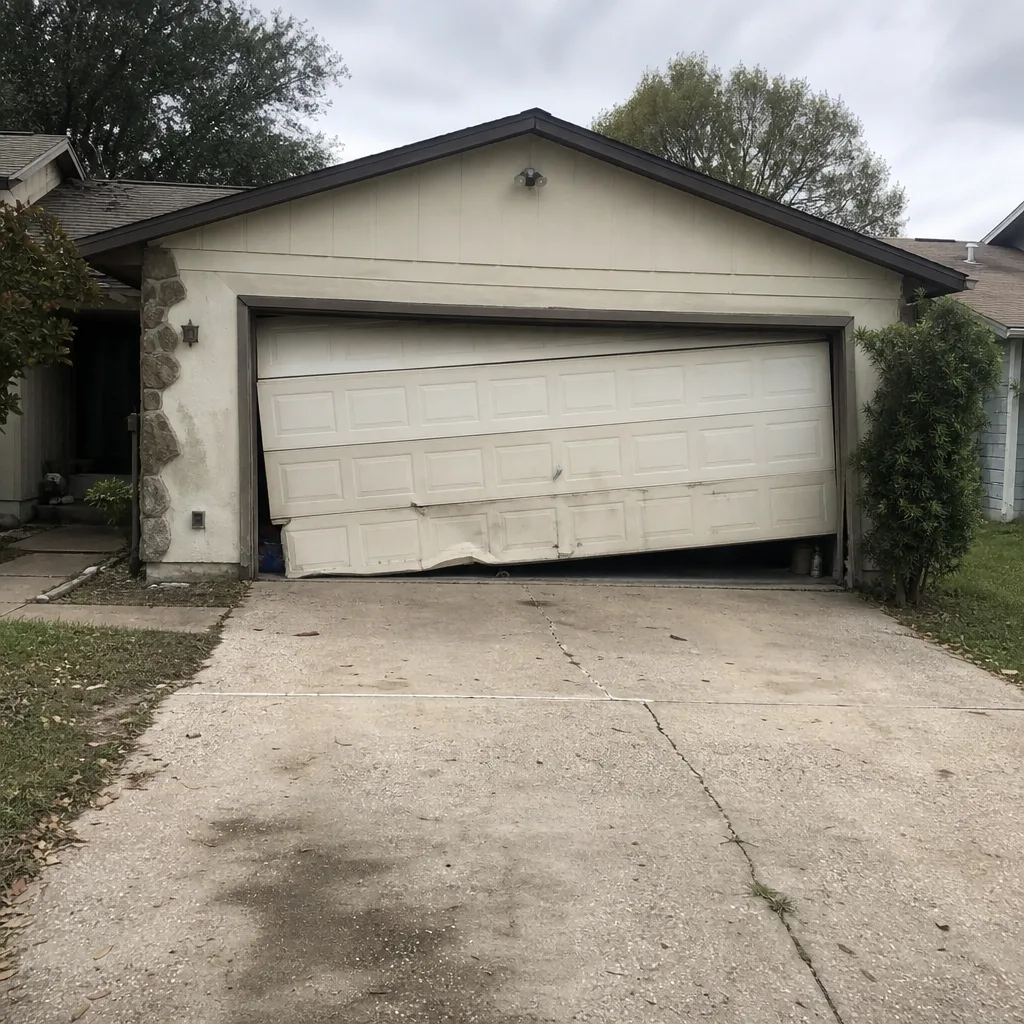 Before
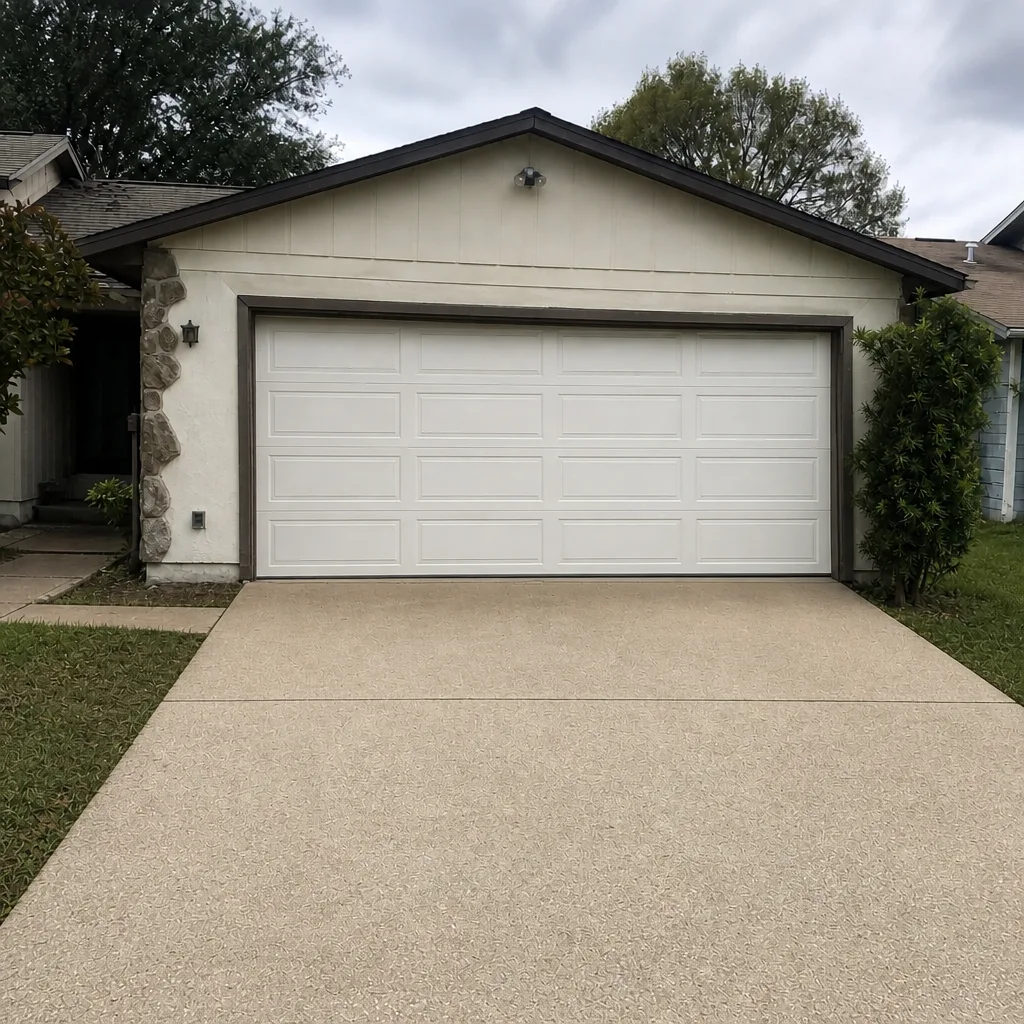 After
When to Call a Professional
Call a professional when the job involves a torsion spring, extension spring, cable, or bottom bracket. Call when the door has fallen out of balance, when a track is bent enough that the door drags, or when you’re simply not sure what’s wrong. Call when a permit or license is required for the work, and when the door is unsafe to operate at all. For opener failures, a dedicated garage door opener repair call is often the fastest way to get the door working again; even if the mechanical door is fine, a failed opener means the whole system is down. Goodwin Garage Door Repair offers free estimates in Riverview. Call (855) 473-8424. We answer 24/7, with fast dispatch from 7am to 7pm, Sunday through Friday.
Frequently Asked Questions
No. Garage door springs are under extreme tension and require specialized training and tools. Replacing a spring yourself risks serious injury, and any mistake can also damage other parts of the door system. A trained technician can safely assess, replace, and rebalance the door.
Sometimes. Swapping like-for-like, where a new opener mounts to the same bracket and uses the same wiring, is manageable for a confident homeowner. If the opener cabinet or rail needs new mounting hardware, or if the new unit is a different type than the old one, a professional call is the safer choice. Once the opener is installed, most brands, including LiftMaster and Chamberlain, need a home-specific setup step to pair the remote; that’s easy to follow.
Some work does and some doesn’t. Routine maintenance and repairs usually don’t need a permit, but full door replacement, structural changes around the opening, and any work that affects wind-load performance may. The best source for the exact answer is Riverview’s building department, not a general guide.
Working on a spring without the right tension knowledge. The other common one is trying to fix an opener problem by replacing parts in sequence instead of diagnosing the fault first. Both end up costing more than the original repair would have.
Yes, our technicians are state-licensed, and our company is insured and bonded. They also have up to 13 years of experience in garage door and opener work, and our team is certified across eight major brands. Call (855) 473-8424 for an exact quote; estimates are free.
Yes, for repair and opener jobs where same-day scheduling is available. Fast dispatch from 7am to 7pm, Sunday through Friday, and we answer 24/7. Installation work like a full door replacement is scheduled, since it requires measuring and ordering first.
The Bottom Line
The decision between DIY and professional for a Riverview garage door isn’t a judgment on your ability. It’s a judgment on the specific task. Sensors, weatherstripping, lubrication, and remote programming are tasks worth learning and doing yourself. Springs, cables, bottom brackets, and any work that needs a permit are tasks that carry real risk or legal requirements and belong with a trained technician. Our Goodwin Garage Door Repair team works on the brand you already have, from Craftsman to Raynor, and we quote in writing before the wrench comes out. Riverview homeowners deserve a straight answer about what’s safe to try and what isn’t; that’s what this guide is for.
If you’re not sure which category a job falls into, call and describe what’s happening. Free estimates, and a technician who can tell you honestly whether you need a visit or just a couple of minutes with a cloth and a wrench. Call (855) 473-8424. We answer 24/7. Fast dispatch from 7am to 7pm, Sunday through Friday.
Written by the team at Goodwin Garage Door Repair.