
Last updated November 15, 2026
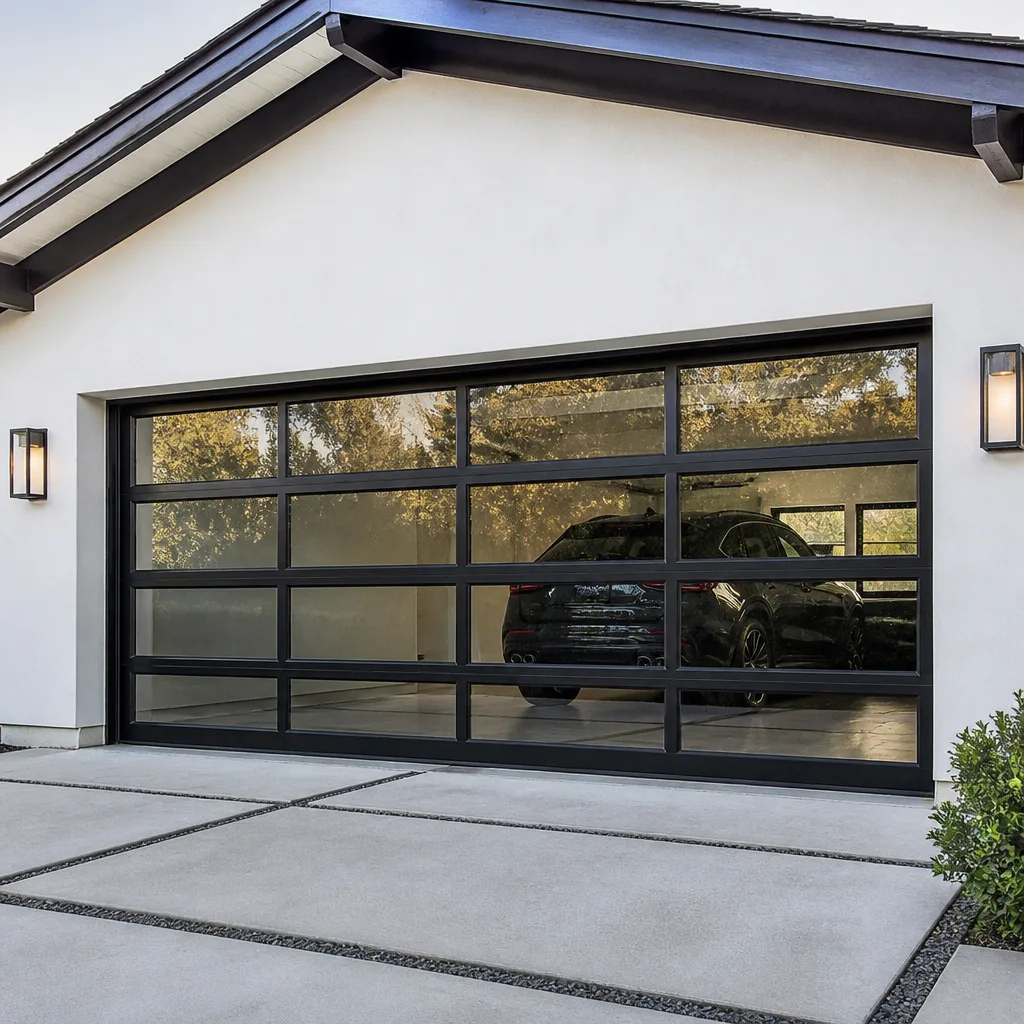 Full-view glass
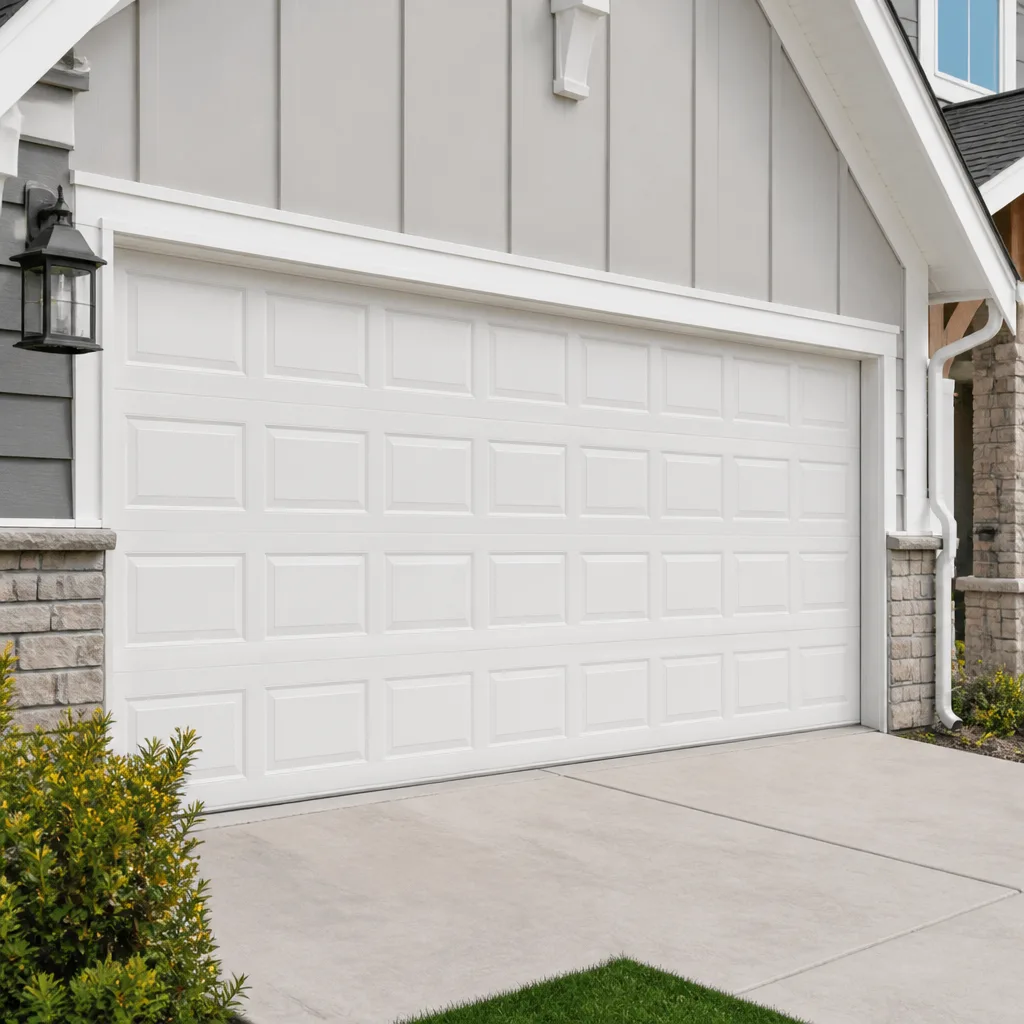 Raised-panel steel
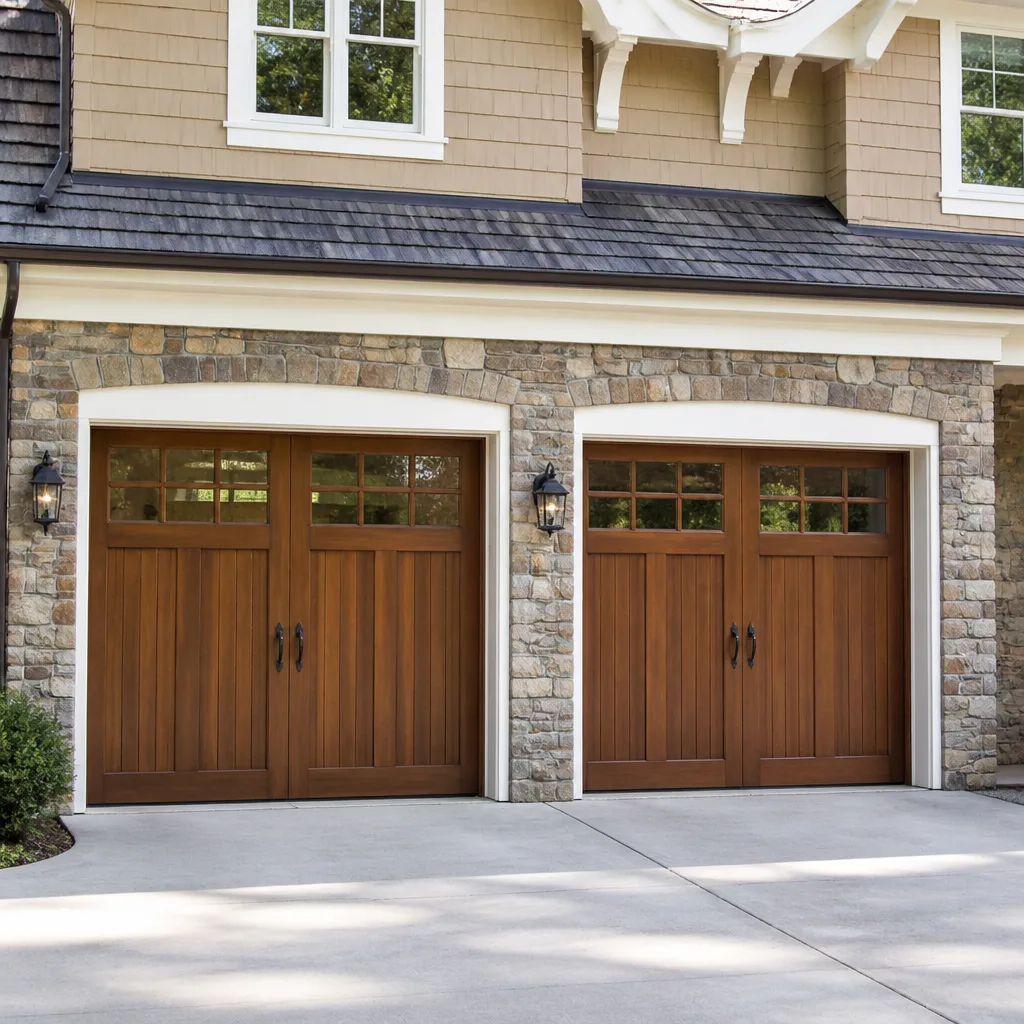 Carriage house
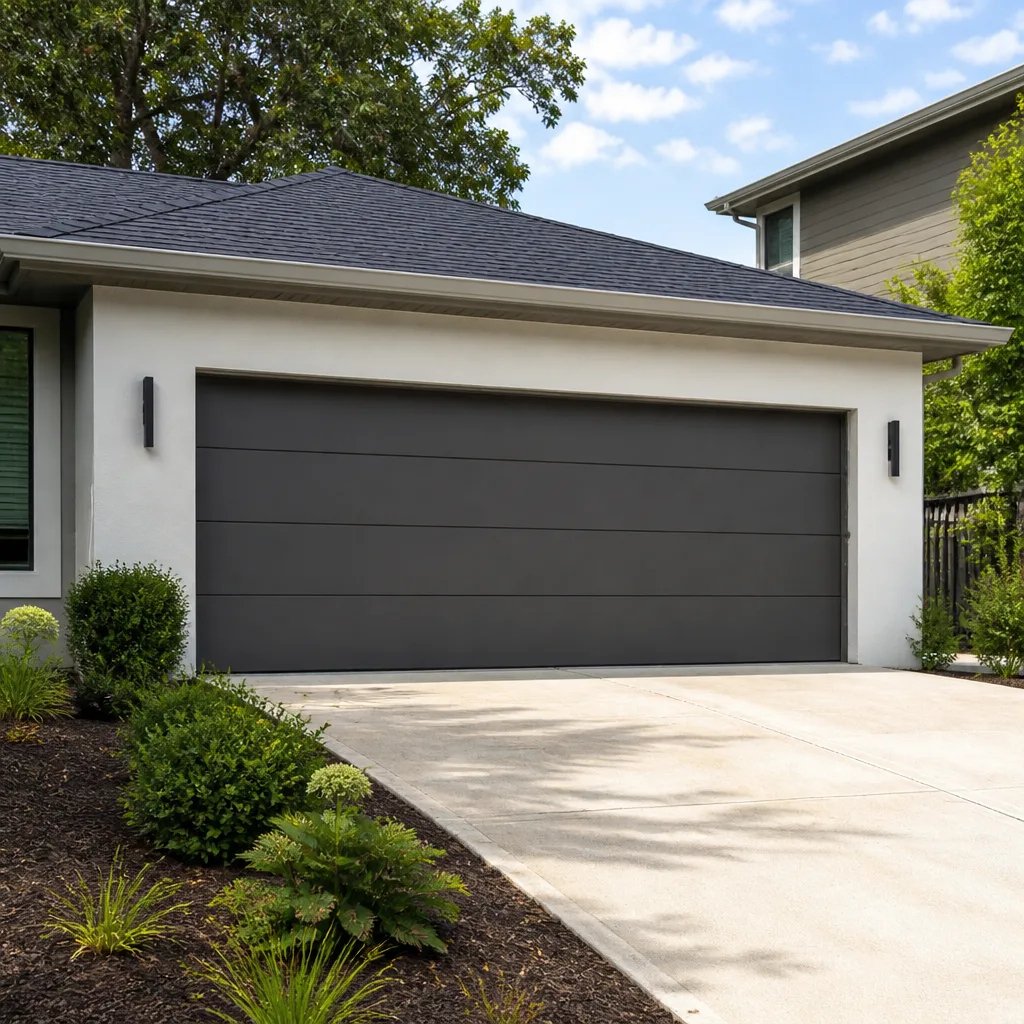 Modern flush
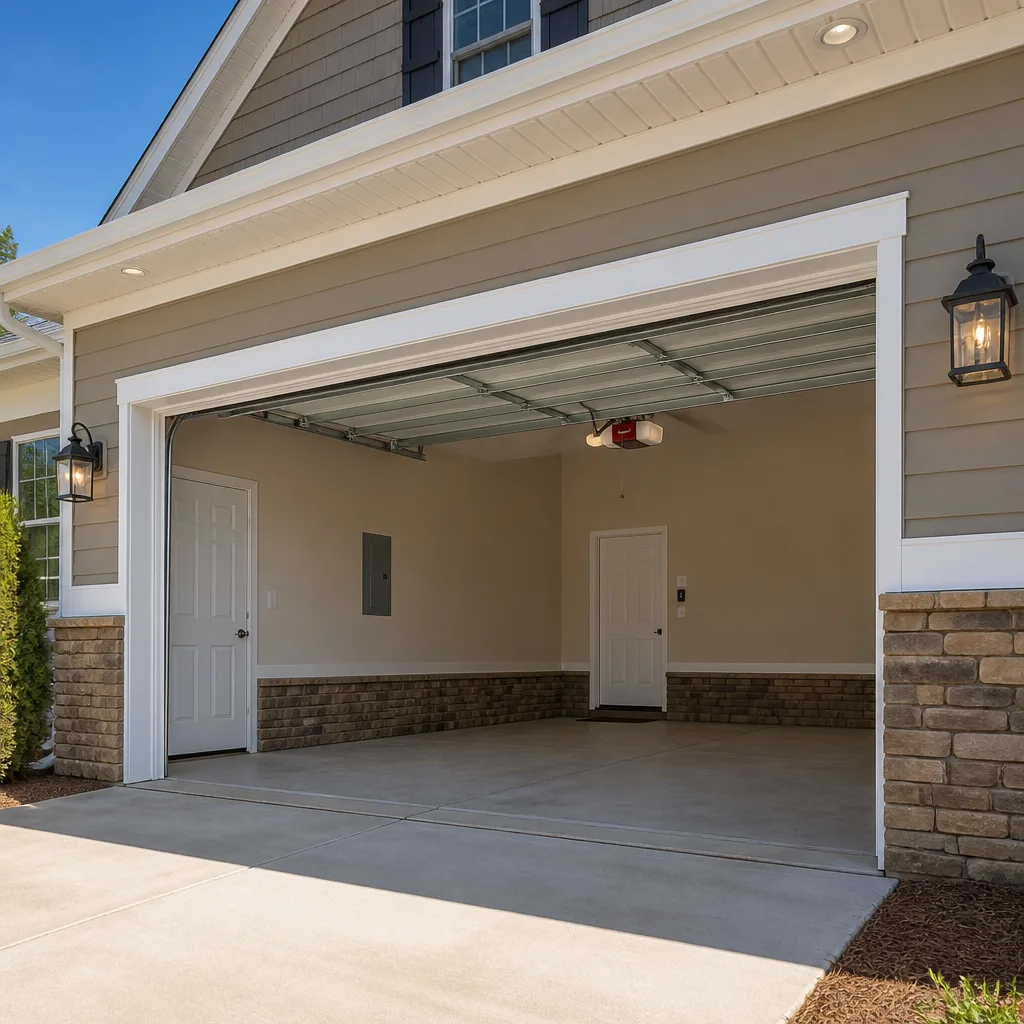 LiftMaster openers
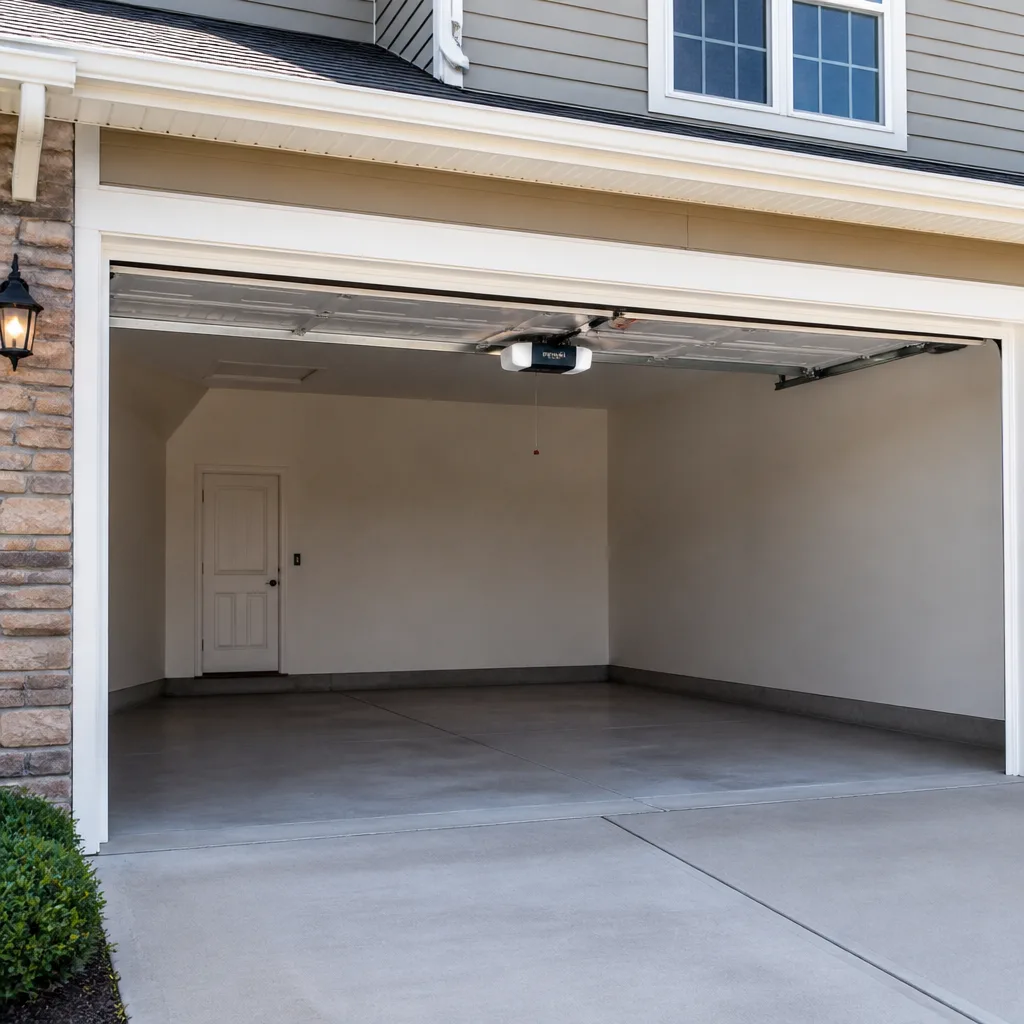 Chamberlain openers
Full 25-point door and opener safety check with every visit - springs, cables, rollers, tracks, and your LiftMaster or Chamberlain opener included
You get a price before we start. It does not change when the pro arrives.
Get your free estimateThe Complete Guide to Garage Doors in Riverview
Most garage door guides are written for places with snow. They talk about freeze-thaw, ice dams and road salt, and almost none of it applies to a home in Riverview. Here the door fights a different set of problems: humid air that never really leaves, sun that bakes the west-facing face of the door every afternoon, and wind-load requirements that narrow which doors are even legal to install before style enters the conversation. On top of that, many Riverview subdivisions sit under HOAs with approved color lists, and the door has to pass architectural review as well as wind code. This guide walks through what actually matters here: the wind-load rules, the choices in steel, aluminum and fiberglass, how slab construction changes your weatherstripping, and how the door, spring and opener work as one machine. You’ll finish knowing what to ask before you order anything.
Quick Answer
Garage door work in Riverview comes down to three things: a door model rated for this area’s wind-load requirements under the Florida Building Code, a material and finish that survive high humidity and strong UV, and a spring-and-opener system matched to the door’s actual weight and size. Start with the wind rating and HOA approval, then choose the look. The written, itemized estimate you get before installation is what sets the final price, and nothing is ordered until you approve it.
Styles & brands we work with
- Raised-panel steel
- Carriage house
- Modern flush
- Full-view glass
- LiftMaster openers
- Chamberlain openers
Table of Contents
- How Wind-Load Requirements Shape Which Doors You Can Buy
- The Door, Spring and Opener Are One System
- Steel vs. Aluminum vs. Fiberglass in Central Florida Humidity
- Why Slab Construction Changes Your Bottom Seal
- HOA Approval and Color Lists in Riverview Communities
- Choosing and Repairing an Opener Here
- Repair or Replace? A Decision Framework
- The Seasonal Maintenance Routine That Fits This Climate
How Wind-Load Requirements Shape Which Doors You Can Buy
The first decision about a new garage door in Riverview isn’t style or color. It’s whether the door is rated to hold up against the wind pressures this part of Florida requires under the wind-load provisions of the Florida Building Code. Florida’s building code sets design wind-speed and pressure requirements by region and by building type, and garage doors are treated as a structural component that must meet them. That means a door that’s perfectly legal to install in another state may not be acceptable here, and the model has to carry documentation showing its rating at the size it will be installed.
Wind-load requirements don’t just pick the door; they shape the whole installation. Reinforced struts, heavier hinges, bracketed mounting and specific anchoring are part of how a compliant door system is put together. A door can be wind-rated on paper and still fail to perform if it’s bolted to framing that can’t take the load, so installers check the surrounding structure before mounting anything. That’s part of what we mean when we say your garage door should be diagnosed correctly the first time.
You don’t have to solve this yourself. The practical path looks like this:
- Ask your installer to show the wind-load documentation for the specific door model at the size you’re buying, not for a different model in the same line.
- Confirm your home’s required design pressure – your local building department can tell you what applies to your address and building type.
- Check that the installation method includes the reinforcement and anchoring the rating calls for.
- Keep the product documents; if you ever sell the house, a buyer’s inspector will look for them.
If any of that sounds like a lot to sort out, that’s normal. It’s the single most technical part of buying a door here, and it’s exactly where a specialist saves you from ordering something that gets rejected at inspection or underperforms in a storm.
The Door, Spring and Opener Are One System
Here’s the mindset shift that prevents most repair bills: the door, the torsion or extension springs and the opener are not three products. They’re one mechanical system, sized together, and a weak link in any part stresses the others. A door that’s out of balance makes the opener work harder every time you press the button. A spring that’s mismatched to the door’s weight speeds up wear on the opener’s gears and drive. An opener that’s too powerful for a light door can mask a balance problem until something breaks.
Understanding how the pieces fit together changes how you diagnose a problem:
- The door is a balanced panel that should move easily by hand – if a healthy adult can’t lift it partway and have it stay, the balance is off.
- The springs carry almost all the door’s weight. They’re the part that does the heavy lifting, not the opener.
- The opener should only be nudging a balanced door. If it’s dragging the door up on its own, something upstream is wrong.
- Tracks and rollers keep the door moving in a straight line. Bent tracks bind the rollers and throw off balance.
- Cables connect the springs to the door. They carry real tension and deserve respect.
When you call because the door “won’t open,” the accurate diagnosis might be a snapped spring, a stripped opener gear, a misaligned safety sensor, or a door that’s simply out of balance. A specialist checks the whole system before quoting, so you’re not paying to replace an opener that only needed its spring fixed. That’s the repair-first approach: find the actual failure, fix that, and leave the rest alone if it’s healthy.
Steel vs. Aluminum vs. Fiberglass in Central Florida Humidity
Material choice in Riverview is a different calculation than in dry climates. Constant humidity and intense sun punish finishes, and the right answer depends on how much maintenance you’re willing to do versus how much you want to spend. Here’s how the three mainstream options perform in the Tampa Bay corridor.
Steel
Steel is the most common residential door material, and for good reason: it’s strong, insulates well when it’s a sandwich-style panel, and comes in the widest range of colors and styles. In this climate the finish matters more than the steel itself. A factory-applied finish holds up well; a door that’s been field-painted or has developed chips will start to show surface rust where moisture sits. Steel is a strong choice for wind-rated installations because it takes reinforcement cleanly. The trade-off is weight, which calls for correctly sized springs.
Aluminum
Aluminum won’t rust the way steel does and it’s lighter, which makes it attractive for full-view and modern designs. It’s also softer, so it dents more easily and can flex under wind pressure if it isn’t properly rated. In a humid climate the appeal is real, but you want aluminum in a wind-rated model with a durable finish, not a light decorative unit.
Fiberglass
Fiberglass resists moisture and won’t corrode, and it holds color well over time in strong sun. It’s a good fit for salt-adjacent or humid environments in general, though here the deciding factors are usually wind rating and HOA approval rather than corrosion. Fiberglass can be brittle under impact and isn’t the first choice if you need maximum wind performance.
The honest summary: there’s no single best material. Steel with a good factory finish handles this climate well and is the most flexible for wind-rated builds. Aluminum suits modern looks if it’s rated. Fiberglass is a solid low-corrosion option. Match the material to your wind requirement and your HOA first, then to your taste.
Why Slab Construction Changes Your Bottom Seal
Most Riverview subdivisions are built slab-on-grade, which means the garage floor is a single concrete slab and the door meets it at the bottom. That’s a different situation than a crawl-space home, and it changes how you should think about the bottom seal and weatherstripping.
On a slab, the door’s bottom seal – the rubber or vinyl strip along the lowest panel – is the main barrier against water, insects and humid air creeping in. Concrete slabs settle and crack, and garage floors are graded to drain outward, so the gap under the door is rarely perfectly even. A bottom seal that’s too stiff won’t conform to an uneven slab. One that’s too soft wears through quickly. The right choice depends on how flat your particular slab is and how the door sits when it closes.
Practical points for a slab home:
- Check the bottom seal for flattening, cracking or gaps that let light through when the door is closed.
- Look at how the door sits across the full width – a seal that compresses on one side and gaps on the other points to balance or track alignment, not just a worn seal.
- Weatherstripping on the sides and top matters as much as the bottom in humid air; gaps there let moisture and pests in.
- Because the slab is your floor and your sill at the same time, water management depends on the seal plus the door’s threshold, not a raised foundation.
We see plenty of Riverview homes where the door closes fine but the bottom seal has quietly failed. It’s a small fix that protects the whole garage.
HOA Approval and Color Lists in Riverview Communities
A lot of homes in Riverview sit inside subdivisions with architectural review, and that adds a step to buying a door that most guides skip entirely. Many HOAs maintain approved color lists and specify acceptable door styles or finishes, and the approval process can take time. If you order a door before you have approval, you may be stuck with something you can’t install.
Getting through this cleanly comes down to sequence:
- Get your HOA’s written architectural guidelines before you shop – ask for the approved colors, finishes and any style restrictions.
- Get your wind-load documentation sorted at the same time, because the door has to satisfy both the code and the HOA.
- Submit the architectural request with the exact model, color and finish you intend to install.
- Wait for written approval, then order. Keep the approval with your door documents.
Approval timelines vary by community and by how often the architectural committee meets, so build that time into your schedule. If you’re not sure whether your neighborhood has an HOA or what its rules are, ask before you commit. We help homeowners pull together the product specs their HOA asks for, so the package is complete the first time it’s submitted.
Choosing and Repairing an Opener Here
Opener problems are the most common garage door issue we’re called for, and they deserve their own attention. An opener is a small motor doing a big job in a hot, humid garage, and heat plus moisture is hard on gears, circuit boards and batteries. The good news is that most opener failures are fixable, and the brand on your ceiling is usually one we already work with – LiftMaster and Chamberlain are everywhere, and Genie and Craftsman units are common too. We work on the brand you already have rather than pushing a replacement.
Garage door opener repair starts with figuring out what actually failed. Common causes include:
- Stripped drive gears – often the result of an unbalanced door putting strain on the motor.
- Misaligned or dirty safety sensors – the door starts down then reverses, or won’t close at all.
- Failed logic board or capacitor – the unit gets power but does nothing.
- Remote or keypad pairing problems – sometimes just a battery, sometimes the receiver.
- Limit and force settings drifted – the door stops short or reverses on contact.
Before you replace an opener, get it diagnosed. A Craftsman unit that’s lost its travel limits isn’t broken; it needs adjustment. A Raynor or Wayne Dalton door that reverses may have a sensor problem, not an opener problem. Smart-home integration is also worth considering when you do replace – LiftMaster and Chamberlain lead that space, and if the rest of your house is already connected, matching that ecosystem makes sense.
Repair or Replace? A Decision Framework
The most expensive mistake in this trade is replacing a door that only needed repair – and the second most expensive is pouring money into a door that’s reached the end of its life. Here’s how to think it through honestly.
Lean toward repair when:
- A single component failed – one spring, one panel, a bent track, a sensor.
- The door is structurally sound and balanced, and the panels are in good shape.
- The opener needs a discrete fix like a gear, capacitor or board.
- The door still meets code and HOA requirements for your home.
Consider replacement when:
- Multiple panels are dented, rusted through or delaminating.
- The door is out of balance and the panels or hardware are worn throughout.
- The door doesn’t meet current wind-load requirements and you’re planning major work anyway.
- Repair costs start approaching the cost of a new door, and you’d be patching an aging system.
Notice that nothing on these lists is about age alone. A door’s condition and code compliance matter more than its birthday. If you call us for garage door repair in Riverview, we’ll tell you plainly which side of that line your door is on, and we’ll quote the repair before recommending replacement. Nothing gets done until you agree on the written estimate.
The Seasonal Maintenance Routine That Fits This Climate
Garage doors here don’t need winterizing, but they do benefit from a routine that suits humidity and heat. A little attention twice a year prevents most of the failures that show up as sudden breakdowns.
- Test the balance. Disconnect the opener and lift the door by hand. It should move smoothly and stay put partway up. If it slams or feels heavy, the springs need attention.
- Look at the springs and cables. Check for gaps in torsion springs, rust or fraying on cables. Never adjust a torsion spring or cable yourself – they’re under extreme tension and cause serious injuries. Call a trained professional.
- Inspect the rollers and hinges. Worn rollers cause noise and drag. Hinges that are loose or rusty should be checked.
- Check the bottom seal and weatherstripping. Look for cracks, flattening and daylight gaps when the door is closed.
- Test the safety reverse. Put a small object in the door’s path and confirm it reverses. This is a safety device and it needs to work.
- Clear the tracks. Wipe out debris and check that the tracks are straight and the door runs without binding.
Test the auto-reverse monthly, and do the visual checks a couple of times a year – before and after the hottest stretch of the year is a sensible rhythm. If anything looks off with the springs, cables or balance, stop and call a professional. Those parts deserve respect, and this is not a DIY job.
Common Mistakes to Avoid
- Ordering a door before checking the wind-load rating. Style is the last thing to decide. If the door isn’t rated for your home’s requirements, it can’t be installed, and you may be out the deposit.
- Skipping HOA approval. Many Riverview subdivisions enforce approved color and style lists. Get written approval before you order, or you could end up with a door your community won’t accept.
- Replacing the opener when the door is out of balance. A strained opener is often a symptom, not the cause. Fix the balance first or you’ll burn through the new unit too.
- Ignoring the bottom seal on a slab floor. It’s a cheap fix that keeps water, insects and humid air out. Letting it fail quietly can lead to moisture problems in the garage.
- Patching panels instead of addressing a failed system. One dented panel is a repair. A door that’s out of balance with multiple worn panels is a replacement decision.
- Choosing material by look alone. Aluminum suits modern designs but needs to be rated; fiberglass resists moisture but is more brittle. Match material to wind rating and HOA rules first.
- Trying to adjust springs or cables yourself. Torsion springs and cables store enormous energy. This is the one part of the system that always belongs to a trained professional.
See the difference
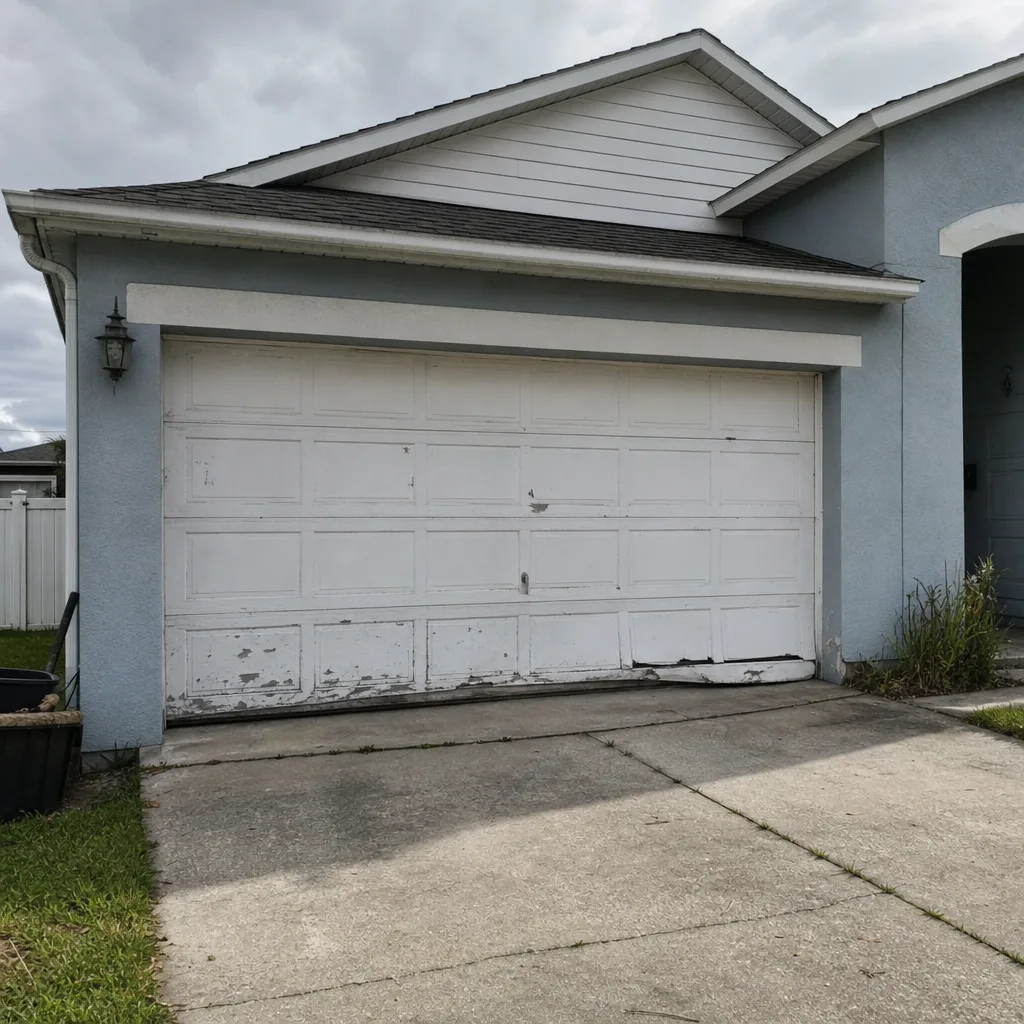 Before
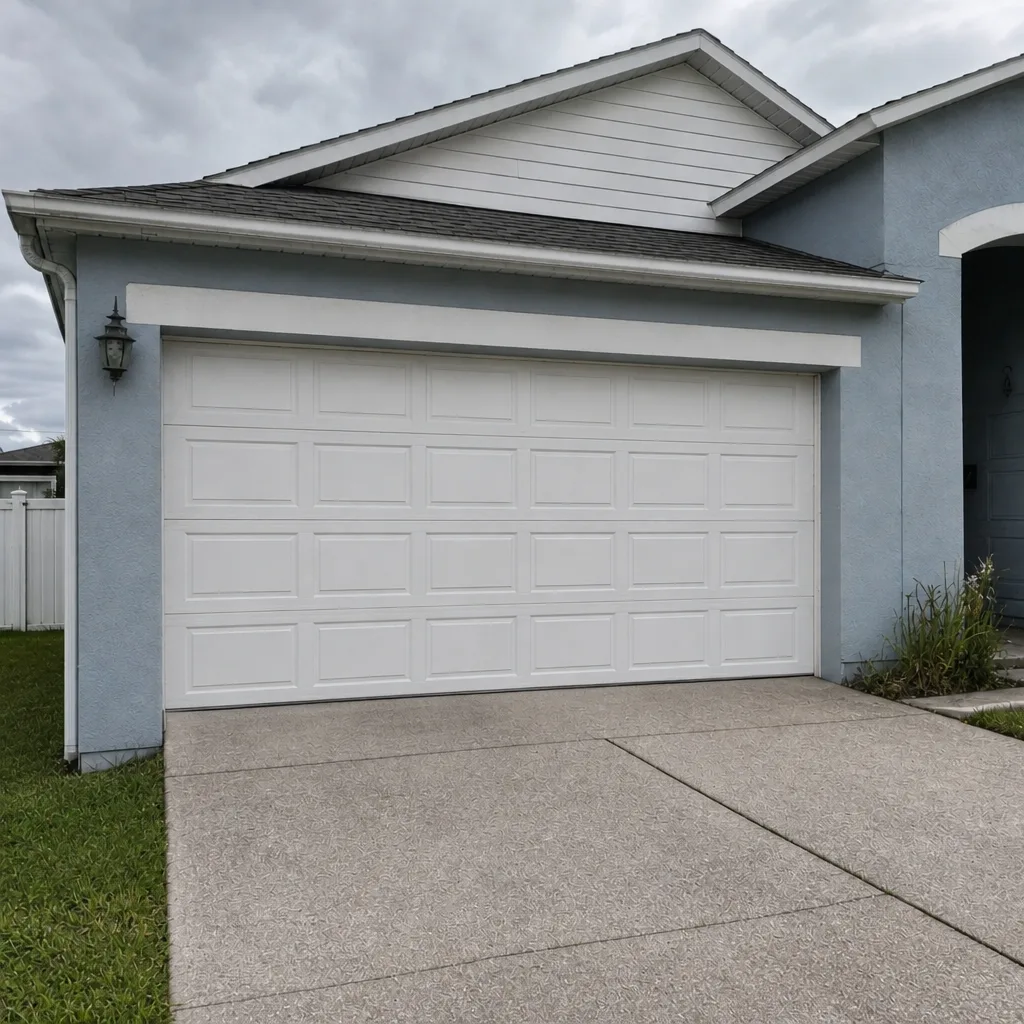 After
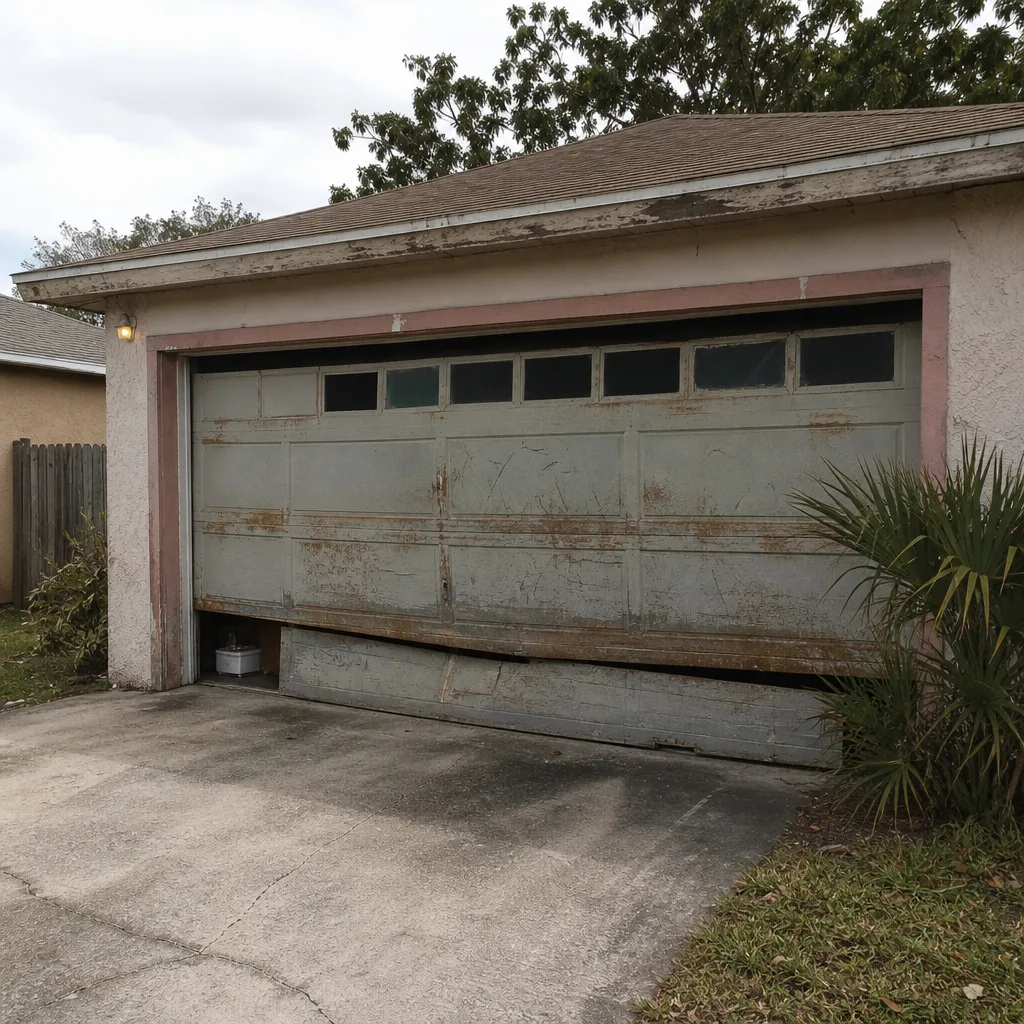 Before
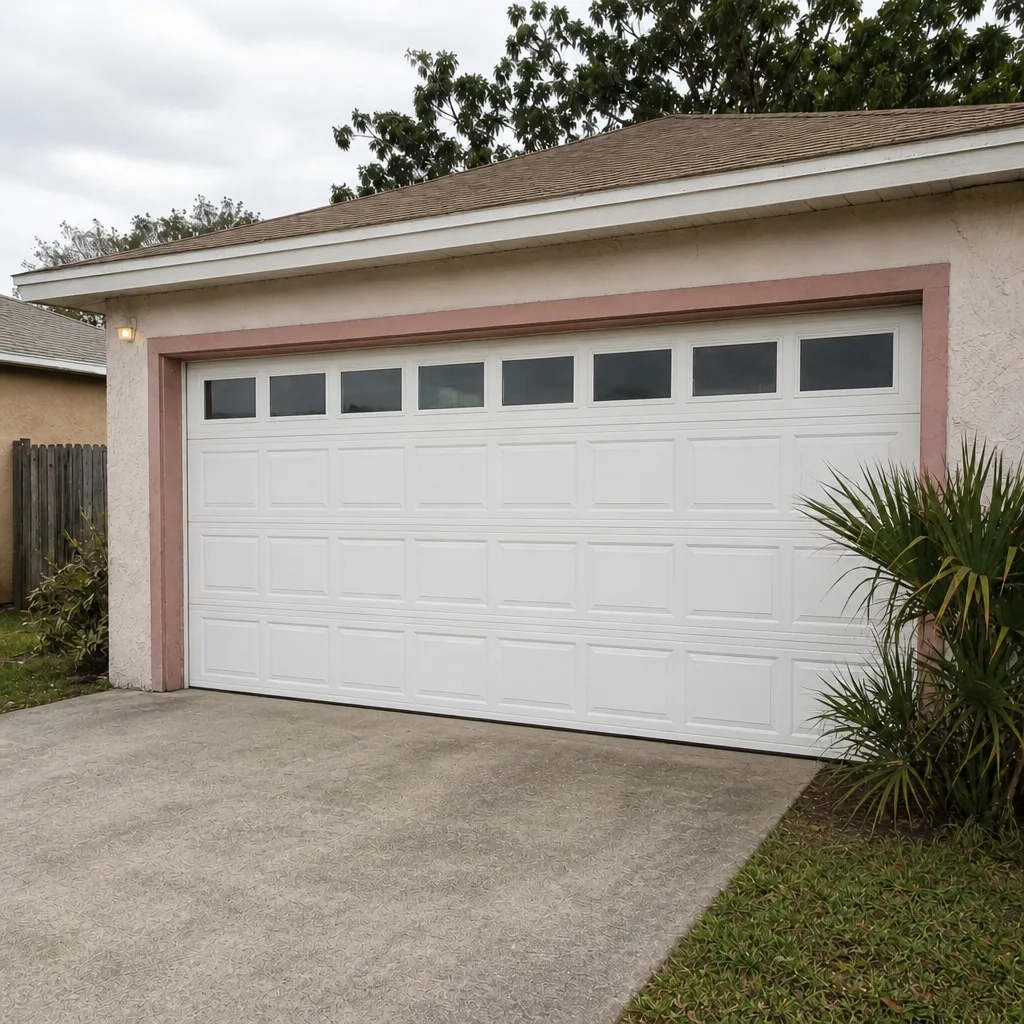 After
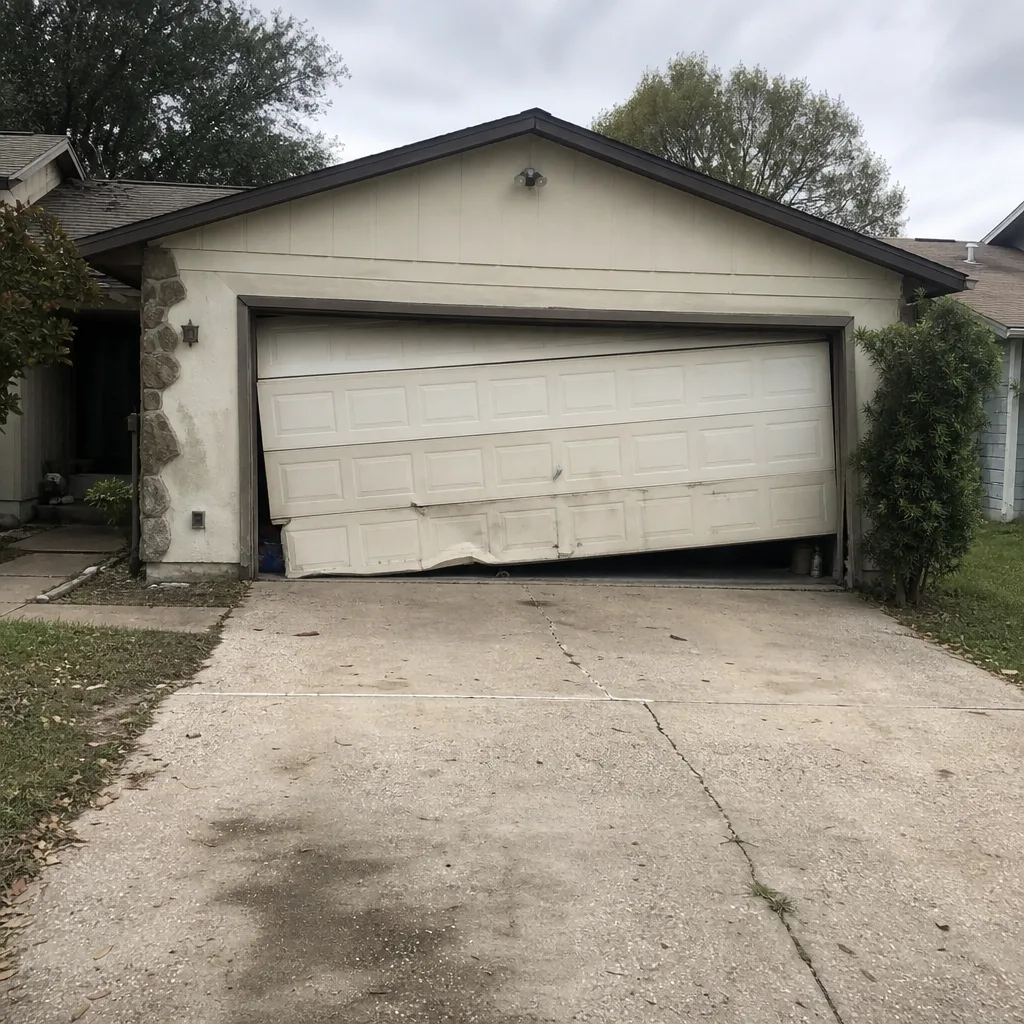 Before
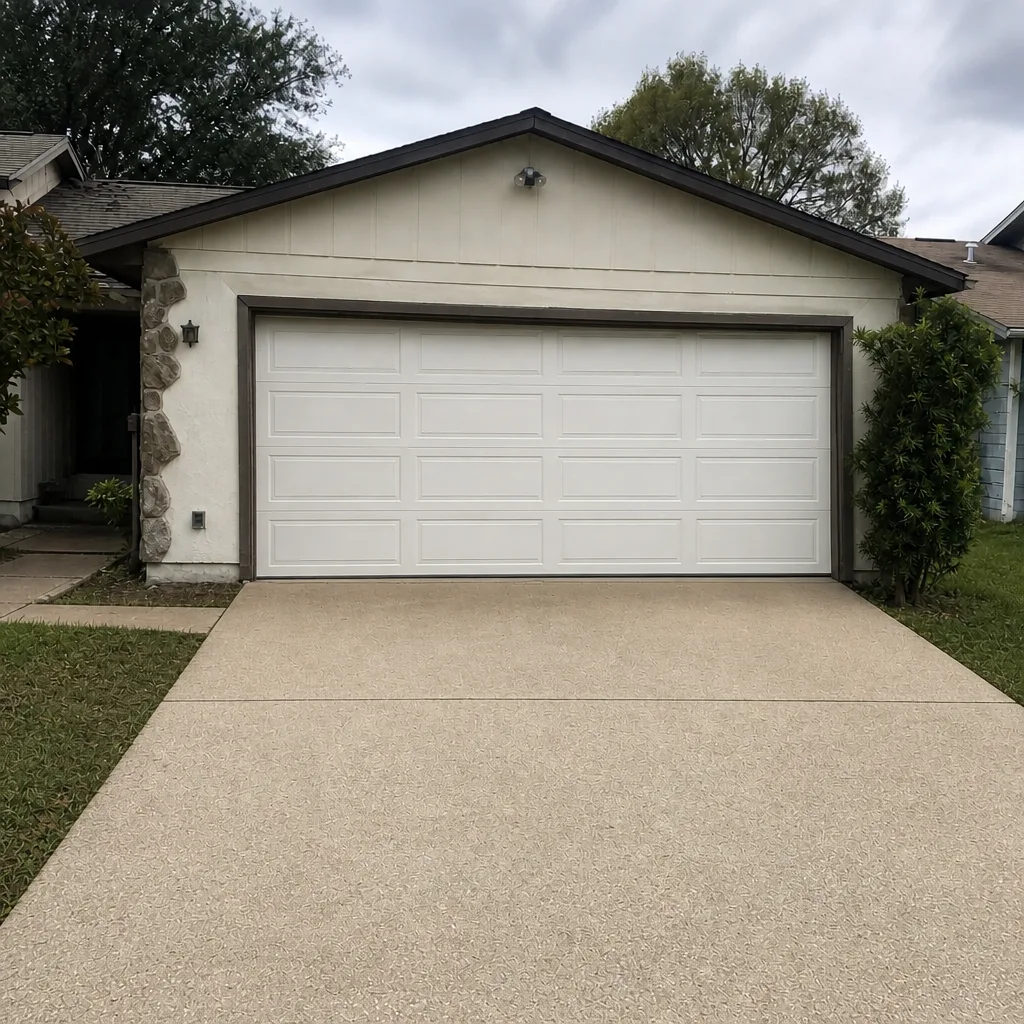 After
When to Call a Professional
Some jobs are fine to handle yourself: wiping down tracks, replacing a remote battery, clearing debris. Others need a specialist. Call us when the door won’t balance, when a spring is broken or looks damaged, when the door comes off its track, when the opener runs but the door doesn’t move, when safety sensors won’t stay aligned, or when you’re planning a new installation and want the wind-load and HOA pieces handled correctly. If a cable is frayed or the door is stuck halfway, keep people clear of it and call before touching anything. Goodwin Garage Door Repair offers free estimates in Riverview – call (855) 473-8424. We answer 24/7. Fast dispatch from 7am to 7pm, Sunday through Friday.
Frequently Asked Questions
Installation is priced per job by a written estimate, and the total depends on door size, material, wind-load rating and features. Because wind requirements and HOA rules narrow your options before style, the estimate starts with the compliant models that fit your home, then adds the specifics. The number you agree to on the written estimate is the price – nothing is ordered until you approve it. Call (855) 473-8424 for a free estimate.
In most cases yes. Florida’s building code sets wind-load requirements by region and building type, and garage doors are treated as a structural component. Your local building department can confirm what applies to your address. Ordering a door without the right rating is the most common and most costly mistake we see. Call (855) 473-8424 and we’ll walk you through the documentation.
Usually yes. We work on the brand you already have, including LiftMaster, Chamberlain, Genie and Craftsman units. Many “dead” openers just need a gear, capacitor or board, or a safety sensor adjustment. A diagnosis tells you whether repair makes sense before you spend on a replacement. Call (855) 473-8424 – estimates are free.
No. The written estimate sets the price, and any change is agreed with you before work continues. If we open the system and find something different from what the symptoms suggested, we tell you and quote it – we don’t surprise you with a bigger invoice. Call (855) 473-8424 for an exact quote.
Yes, we’re licensed and insured, and our technicians have up to 13 years of experience working on garage doors specifically – not general handyman work. Every call is garage-door-specific, which is why we can diagnose accurately and repair first instead of selling you a whole new system. Call (855) 473-8424 to book a free estimate.
Repair if a single component failed and the door is otherwise sound. Replace if multiple panels are damaged or worn and the door doesn’t meet current requirements. A balance test and a look at the panels usually settle it. We’ll tell you which side of that line you’re on, with no upselling. Call (855) 473-8424 and we’ll take a look.
The Bottom Line
A garage door decision in Riverview starts with code and climate, not color. Get the wind-load rating and HOA approval settled first, then pick a material that handles humidity and sun, then make sure the door, springs and opener are sized as one system. Repair before you replace when a single part has failed, and treat springs and cables as professional-only work. None of this is complicated once you know the sequence – and the written estimate before any work starts keeps the price honest. If you need garage door repair or a garage door opener repair in Riverview, Goodwin is here to help.
Call (855) 473-8424 for a free estimate. We answer 24/7. Fast dispatch from 7am to 7pm, Sunday through Friday. Every job is quoted and agreed before work starts, and our technicians bring up to 13 years of experience to a door – whatever brand you already have. Goodwin Garage Door Repair works on one trade, done right.
Written by the team at Goodwin Garage Door Repair.